Huawei Pura 80 Ultra vs Xiaomi 17T Pro
81
out 100

VS
93
out 100
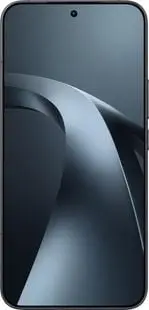
Compared 2 smartphones : Huawei Pura 80 Ultra Manufactured in June, 2025, with display 6.8 with chipsetHiSilicon Kirin 9020, vs Xiaomi 17T Pro, Manufactured in May, 2026 with chipsetMediaTek Dimensity 9500. Below are specs, tests, pros and cons for each device
Key Differences
Reasons to choose Huawei Pura 80 Ultra
- Higher pixel density: 459ppi
- Supports newer USB: 3.1 vs 2
- Supports DisplayPort
- Includes charger
Reasons to choose Xiaomi 17T Pro
- Larger display: 6.83in
- Higher refresh rate: 144Hz
- Lighter design: 219g vs 233.5g
- Higher battery capacity: 7000mAh vs 5700mAh
- Newer Bluetooth version: 6.0 vs 5.2
- Supports Dolby Atmos
- Built-in eSIM
Versions
| Memory Options | - 16/512 GB - 16/1024 GB |
- 12/256 GB - 12/512 GB - 12/1024 GB |
Review
Display
Color accuracy, sharpness & brightness
Camera
Main & front camera tests
Performance
App & system performance
Games
3D gaming performance
Battery
Battery life, charging speed & type
Connectivity
Connectivity features
Adjust each parameter’s importance to find the best match for you.
Tests & specs
Specs & test comparisonDisplay
| Type | OLED | AMOLED |
| Size | 6.8 in | 6.83 in |
| Resolution | 1276x2848 pixels | 1280x2772 pixels |
| Aspect ratio | 20:9 | 19.5:9 |
| Pixel density | 459 ppi | 447 ppi |
| Refresh rate | 120 Hz | 144 Hz |
| Adaptive refresh rate | Yes (1-120 Hz) | Yes |
| HDR support | Yes HDR10 | Yes, Dolby Vision |
| Touch Sampling Rate | 300 Hz | 480 Hz |
| Screen-to-body ratio | 90 % | 91.1 % |
| Features | - DCI-P3 - Always-On Display - DC dimming |
- DCI-P3 - Always-On Display - DC dimming |
Design & Build
| Height | 163 mm (6.42 in) | 162.2 mm (6.39 in) |
| Width | 76.1 mm (3 in) | 77.5 mm (3.05 in) |
| Thickness | 8.3 mm (0.33 in) | 8.25 mm (0.32 in) |
| Weight | 233.5 g (8.24 oz) | 219 g (7.72 oz) |
| Water resistance | IP69 | IP68 |
| Cooling system | Vapor chamber | Vapor chamber |
| Back panel | Glass | n/a |
| Frame | Metal | Metal |
| Colors | - Black - Gold - Brown |
- Black - Blue - Purple |
| Fingerprint sensor | Yes In-Button | Yes, In-Display |
Screen-to-body ratio
Performance
| Chipset | HiSilicon Kirin 9020 | MediaTek Dimensity 9500 |
| Max Frequency | 2500 MHz | 4210 MHz |
| CPU Cores | 8 (1 + 3 + 4) | 8 (1 + 3 + 4) |
| Architecture | - 4/1.6 (Taishan-Little) - 3/2.15 (TaiShan V120) - 1/2.5 (TaiShan V121) |
- 4/2.7 (C1-Pro) - 3/3.5 (C1-Premium) - 1/4.21 (C1-Ultra) |
| Process | SMIC | TSMC |
| Transistor Size | 7 nm | 3 nm |
| Neural Processor | Da Vinci | MediaTek NPU 990 |
| Graphics | Maleoon 920 | n/a |
| GPU Cores | 1024 | n/a |
| GPU Frequency | 840 MHz | n/a |
| FLOPS | 1720.3 GFLOPS | n/a |
| Geekbench 6 (Single-Core) | 1610 | 3099 |
| Geekbench 6 (Multi-Core) | 5144 | 9438 |
| CPU | 355787 | 933780 |
| GPU | 282352 | 1300550 |
| Memory | 318260 | 397001 |
| UX | 218930 | 692260 |
| NanoReview Score | 1175329 | 3323591 |
Memory
| RAM Size | 16 GB | 12 GB |
| Memory Type | LPDDR5X | LPDDR5X |
| Memory Frequency | n/a | 5333 MHz |
| Channels | 4 | 4 |
| Storage Capacity | 512 GB | 256 GB |
| Storage Type | UFS 4.0 | UFS 4.1 |
| Memory Card | No | No |
Software
| OS | HarmonyOS (Upgradeable to HarmonyOS 5.1) | Android 16 |
| UI Skin | n/a | HyperOS 3 |
Battery
| Volume | 5700 mAh | 7000 mAh |
| Max Charging Power | 100 W | 100 W |
| Battery Type | Li-Po | Silicon Carbon (Si/C) |
| Removable | No | No |
| Wireless Charging | Yes (80 W) | Yes (50 W) |
| Reverse Charging | Yes (Wireless) | Yes, (Wireless) |
| Fast Charging | Yes | Yes (72% in 30 min) |
| Full Charge Time | n/a | 0:44 h |
| Web Browsing | n/a | 18:30 h |
| Video Playback | n/a | 24:44 h |
| Games | n/a | 09:34 h |
| Standby Mode | n/a | 131 h |
Main camera
| Matrix | 50 MP | 50 MP |
| Photo resolution | 8192x6144 pixels | 8192x6144 pixels |
| Zoom | Optical, 9.4x | Optical, 5x |
| Flash | LED | Dual LED |
| Stabilization | Optical | Optical |
| 8K Recording | No | Yes (Up to 30 fps) |
| 4K Recording | Yes (Up to 60 fps) | Yes (Up to 120 fps) |
| 1080p Recording | Yes (Up to 60 fps) | Yes (Up to 60 fps) |
| Slow Motion | 960 fps (1080p) | 1920 fps (720p) |
| Wide-angle lens | n/a | 120 ° |
| Lenses count | Standard: 50 MP Telephoto: 50 MP Telephoto: 12.5 MP Ultra-wide: 40 MP |
Standard: 50 MP Telephoto: 50 MP Ultra-wide: 12 MP |
| Features | - Bokeh effect - Pro mode |
- Bokeh effect - Pro mode - RAW support |
| Matrix | 50 MP | 50 MP |
| Aperture | f/1.6 - 4.0 | f/1.7 |
| Focal length | 23 mm | 23 mm |
| Sensor | n/a | Omnivision 950 LightHunter |
| Sensor size | 1/0 | 1/1.31 (0.76) |
| Pixel size | 1.6 μm | 1.2 μm |
| Autofocus | Phase autofocus | Phase autofocus |
| Stabilization | Optical | Optical |
| Matrix | 50 MP | 50 MP |
| Aperture | f/2.4 | f/3.0 |
| Focal length | 83 mm | 115 mm |
| Sensor | n/a | Samsung S5KJN5 |
| Sensor size | n/a | 1/2.76 (0.36) |
| Pixel size | n/a | 0.64 μm |
| Stabilization | Optical | Optical |
| Matrix | 40 MP | 12 MP |
| Aperture | f/2.2 | f/2.2 |
| Focal length | 13 mm | 15 mm |
| Sensor size | n/a | 1/3.06 (0.33) |
| Pixel size | 1 μm | n/a |
| Stabilization | Digital | Digital |
Front camera
| Matrix | 13 MP | 32 MP |
| Photo resolution | 4160x3120 pixels | n/a |
| Aperture | f/2.0 | f/2.2 |
| Focal length | n/a | 21 mm |
| Sensor | CMOS | CMOS |
| Sensor size | n/a | 1/3.44 (0.29) |
| Pixel size | n/a | 0.64 μm |
| Autofocus | Phase autofocus | No |
| Stabilization | Digital | Digital |
| Video resolution | 2160p (4K) at 60 fps | 2160p (4K) at 30 fps |
| TOF 3D sensor | No | No |
Connectivity
| Wi-Fi version | Wi-Fi 7 (802.11 a/b/g/n/ac/ax/be) | Wi-Fi 7 (802.11 a/b/g/n/ac/ax/be) |
| Wi-Fi features | - Dual Band - Wi-Fi MiMO - Wi-Fi Direct - Wi-Fi Hotspot - Wi-Fi Display |
- Dual Band - Wi-Fi MiMO - Wi-Fi Direct - Wi-Fi Hotspot - Wi-Fi Display |
| Bluetooth version | 5.2 | 6.0 |
| Bluetooth features | LE | LE |
| USB type | USB Type-C | USB Type-C |
| USB version | 3.1 | 2 |
| USB features | - Charging - USB Storage Mode - OTG |
- Charging - USB Storage Mode - OTG |
| DisplayPort | Yes DP 1.2 | No |
| GPS | - GPS - GLONASS - Galileo - QZSS - NAVIC |
- GPS - GLONASS - Beidou - Galileo - QZSS |
| NFC* | Yes | Yes |
| Infrared Port | Yes | Yes |
| SIM Count* | 2 | 2 |
| SIM Type | Nano | Nano |
| SIM Mode | Dual SIM Standby | Dual SIM Standby |
| eSIM Support * | No | Yes |
| Hybrid Slot | No | No |
| 2G Bands | n/a | GSM B2/3/5/8 |
| 3G Bands | n/a | WCDMA B1/2/4/5/8 |
| LTE Bands* | n/a | LTE (B1/B2/B3/B4/B5/B7/B8/B12/B13/B17/B18/B19/B20/B25/B26/B28/B32/B34/B38/B39/B40/B41/B42/B48/B66/B71) |
| 5G Support | Yes | Yes |
Sound
| 3.5 mm Jack | No | No |
| FM Radio | No | No |
| Dolby Atmos | No | Yes |
Other
| Class | Flagship | Flagship |
| Announced | June, 2025 yr | May, 2026 yr |
| Release Date | June, 2025 yr | May, 2026 yr |
| MSRP ($) | 1499 | 899 |
| Sensors | - Barometer - Proximity Sensor - Gyroscope - Accelerometer - Ambient Light Sensor - Compass - Fingerprint sensor |
- Proximity Sensor - Gyroscope - Accelerometer - Ambient Light Sensor - Compass - Fingerprint sensor |
| Charger Included | Yes 100 W | No |
*
Attention!
Config, frequencies, NFC, and other specs may vary by region.
Results
After analyzing the data, we consider Xiaomi 17T Pro the clear winner in this comparison.
Survey
Total Votes: 1


