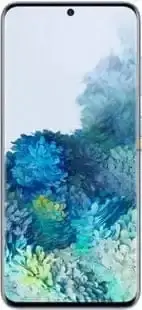
Samsung Galaxy S20 vs Samsung Galaxy A51
62
out 100
VS
41
out 100

Compared 2 smartphones : Samsung Galaxy S20 Manufactured in March, 2020, with display 6.2 with chipsetSamsung Exynos 9 Octa 990, vs Samsung Galaxy A51, Manufactured in December, 2019 with chipsetSamsung Exynos 9 Octa 9611. Below are specs, tests, pros and cons for each device
Key Differences
Reasons to choose Samsung Galaxy S20
- Higher pixel density: 563ppi
- Higher refresh rate: 120Hz
- Lighter design: 163g vs 172g
- Supports newer USB: 3.1 vs 2
- Built-in eSIM
Reasons to choose Samsung Galaxy A51
- Larger display: 6.5in
Versions
| Memory Options | 8/128 GB | - 4/64 GB - 4/128 GB - 6/128 GB - 8/128 GB - 8/256 GB |
Review
Display
Color accuracy, sharpness & brightness
Camera
Main & front camera tests
Performance
App & system performance
Games
3D gaming performance
Battery
Battery life, charging speed & type
Connectivity
Connectivity features
Adjust each parameter’s importance to find the best match for you.
Tests & specs
Specs & test comparisonDisplay
| Type | Dynamic AMOLED | Super AMOLED |
| Size | 6.2 in | 6.5 in |
| Resolution | 1440x3200 pixels | 1080x2400 pixels |
| Aspect ratio | 20:9 | 20:9 |
| Pixel density | 563 ppi | 405 ppi |
| Refresh rate | 120 Hz | 60 Hz |
| Adaptive refresh rate | No | No |
| Max brightness | 800 nits | 400 nits |
| HDR support | Yes HDR10+ | No |
| Screen-to-body ratio | 88.5 % | 87.5 % |
| Features | - DCI-P3 - Always-On Display |
Always-On Display |
| sRGB gamut | 99.8 % | 98.8 % |
| PWM (Flicker) | 242 Hz | 242 Hz |
| Response time | 8.5 ms | 25 ms |
| Contrast | ∞ Infinite | ∞ Infinite |
Design & Build
| Height | 151.7 mm (5.97 in) | 158.5 mm (6.24 in) |
| Width | 69.1 mm (2.72 in) | 73.6 mm (2.9 in) |
| Thickness | 7.9 mm (0.31 in) | 7.9 mm (0.31 in) |
| Weight | 163 g (5.75 oz) | 172 g (6.07 oz) |
| Water resistance | IP68 | No |
| Back panel | Glass | Plastic |
| Frame | Metal | Plastic |
| Colors | - Gray - Blue - Red |
- White - Black |
| Fingerprint sensor | Yes In-Display | Yes In-Display |
Screen-to-body ratio
Performance
| Chipset | Samsung Exynos 9 Octa 990 | Samsung Exynos 9 Octa 9611 |
| Max Frequency | 3020 MHz | 2300 MHz |
| CPU Cores | 8 (2 + 2 + 4) | 8 (4 + 4) |
| Architecture | - 4/2 (Cortex-A55) - 2/2.5 (Cortex-A76) - 2/2.73 (Exynos M5) |
- 4/1.7 (Cortex-A53) - 4/2.3 (Cortex-A73) |
| Process | Samsung | Samsung |
| Transistor Size | 7 nm | 10 nm |
| Neural Processor | Yes | Yes |
| Graphics | Mali-G77 MP11 | Mali-G72 MP3 |
| GPU Cores | 704 | 54 |
| GPU Frequency | 550 MHz | 850 MHz |
| FLOPS | 1126 GFLOPS | 113.8 GFLOPS |
| Geekbench 6 (Single-Core) | 1139 | 512 |
| Geekbench 6 (Multi-Core) | 3080 | 1556 |
| CPU | 206940 | 83857 |
| GPU | 180770 | 45166 |
| Memory | 136999 | 63828 |
| UX | 155352 | 75909 |
| NanoReview Score | 680061 | 268760 |
| Max Surface Temp. | 49.7 °C | 42.2 °C |
| Stability | 51 % | 95 % |
| Graphics Test | 25 fps | 4 fps |
| Graphics Score | 4221 | 812 |
| Writing score | 13300 | n/a |
| Web score | 9221 | n/a |
| Video editing | 6001 | n/a |
| Data manipulation | 8487 | n/a |
| NanoReview Score | 11213 | n/a |
Memory
| RAM Size | 8 GB | - 4 GB - 6 GB |
| Memory Type | LPDDR5 | LPDDR4X |
| Memory Frequency | 3200 MHz | 1866 MHz |
| Channels | 2 | 2 |
| Storage Capacity | 128 GB | - 64 GB - 128 GB |
| Storage Type | UFS 3.0 | UFS 2.0 |
| Memory Card | MicroSD | MicroSD |
Software
| OS | Android 10.0 (Upgradeable to Android 13) | Android 10 (Upgradeable to Android 13) |
| OS Size | 20.1 GB | 23 GB |
| UI Skin | One UI 5.1 | One UI 5.1 |
Battery
| Volume | 4000 mAh | 4000 mAh |
| Max Charging Power | 25 W | 15 W |
| Battery Type | Li-ion | Li-Po |
| Removable | No | No |
| Wireless Charging | Yes (15 W) | No |
| Reverse Charging | Yes (Wireless) | No |
| Fast Charging | Yes (100% in 75 min) | Yes (40% in 35 min) |
| Full Charge Time | 1:15 h | 1:50 h |
| Web Browsing | 06:49 h | 07:15 h |
| Video Playback | 10:33 h | 11:25 h |
| Games | 04:30 h | 04:49 h |
| Standby Mode | 69 h | 81 h |
Main camera
| Matrix | 12 MP | 48 MP |
| Photo resolution | 4000x3000 pixels | 8000x6000 pixels |
| Zoom | Optical, 1.1x | Digital |
| Flash | LED | LED |
| Stabilization | Optical | Digital |
| 8K Recording | Up to 24FPS | No |
| 4K Recording | Yes (Up to 60 fps) | Yes (Up to 30 fps) |
| 1080p Recording | Yes (Up to 60 fps) | Yes (Up to 30 fps) |
| Slow Motion | 960 fps (720p) | 960 fps (720p) |
| Wide-angle lens | 120 ° | 120 ° |
| Lenses count | Standard: 12 MP Telephoto: 64 MP Ultra-wide: 12 MP |
Standard: 48 MP Ultra-wide: 12 MP Macro: 5 MP Depth: 5 MP |
| Features | - Bokeh effect - Pro mode - RAW support |
- Bokeh effect - Pro mode |
| Matrix | 12 MP | 48 MP |
| Aperture | f/1.8 | f/2.0 |
| Focal length | 26 mm | 26 mm |
| Sensor | Samsung S5K2LD | Sony IMX582 |
| Sensor size | 1/1.76 | 1/2 |
| Pixel size | 1.8 μm | 0.8 μm |
| Autofocus | Phase autofocus (Dual Pixel) | Phase autofocus |
| Stabilization | Optical | Digital |
| Matrix | 64 MP | n/a |
| Aperture | f/2.0 | n/a |
| Focal length | 29 mm | n/a |
| Sensor | Samsung Bright S5KGW2 | n/a |
| Sensor size | 1/1.72 | n/a |
| Pixel size | 0.8 μm | n/a |
| Stabilization | Optical | n/a |
| Matrix | 12 MP | 12 MP |
| Aperture | f/2.2 | f/2.2 |
| Focal length | 13 mm | 13 mm |
| Sensor | Samsung S5K2LA | n/a |
| Sensor size | 1/2.55 | n/a |
| Pixel size | 1.4 μm | 1.12 μm |
| Stabilization | Digital | Digital |
Front camera
| Matrix | 10 MP | 32 MP |
| Photo resolution | 2592x3872 pixels | 6560x4928 pixels |
| Aperture | f/2.2 | f/2.2 |
| Focal length | 26 mm | 26 mm |
| Sensor | Samsung S5K3J1 | Samsung S5KGD1 |
| Sensor size | 1/3.2 | 1/2.8 |
| Pixel size | 1.22 μm | 0.8 μm |
| Autofocus | Phase autofocus (Dual Pixel) | No |
| Stabilization | Digital | Digital |
| Video resolution | 2160p (4K) at 60 fps | 2160p (4K) at 30 fps |
| TOF 3D sensor | No | No |
Connectivity
| Wi-Fi version | Wi-Fi 6 (802.11 b/g/n/ac/ax) | Wi-Fi 5 (802.11 a/b/g/n/ac) |
| Wi-Fi features | - Wi-Fi Direct - Wi-Fi Hotspot - Wi-Fi Display |
- Dual Band - Wi-Fi Direct - Wi-Fi Hotspot - Wi-Fi Display |
| Bluetooth version | 5 | 5 |
| Bluetooth features | LE, A2DP | PBAP/PAB, PAN, OPP, MAP, HSP, HID, HFP, DIP, AVRCP, A2DP |
| USB type | USB Type-C | USB Type-C |
| USB version | 3.1 | 2 |
| USB features | - Charging - USB Storage Mode - OTG |
- Charging - USB Storage Mode - OTG |
| GPS | - GPS - GLONASS - Beidou - Galileo |
- GPS - GLONASS - Beidou - Galileo |
| NFC* | Yes | Yes |
| Infrared Port | No | No |
| SIM Count* | 2 | 2 |
| SIM Type | Nano | Nano |
| SIM Mode | Dual SIM Standby | Dual SIM Standby |
| eSIM Support * | Yes | No |
| Hybrid Slot | Yes | No |
| 2G Bands | GSM 850 / 900 / 1800 / 1900 - SIM 1 & SIM 2 | GSM 850 / 900 / 1800 / 2100 / 2600 |
| 3G Bands | HSDPA 850 / 900 / 1900 / 2100 | UMTS 850 / 900 / 1900 / 2100 |
| LTE Bands* | LTE (B850/B900/B1700/B1900/B2100) | LTE (B850/B900/B1800/B2100/B2600) |
| LTE category | 22 | 12 |
| 5G Support | No | No |
Sound
| Speakers | Stereo | Mono |
| 3.5 mm Jack | No | Yes |
| FM Radio | No | Yes |
| Dolby Atmos | Yes | Yes |
Other
| Class | Flagship | Mid-range |
| Announced | February, 2020 yr | December, 2019 yr |
| Release Date | March, 2020 yr | December, 2019 yr |
| Launch Price ($) | 999 | 399 |
| Sensors | - Barometer - Proximity Sensor - Gyroscope - Accelerometer - Compass - Fingerprint sensor |
- Proximity Sensor - Gyroscope - Accelerometer - Ambient Light Sensor - Compass - Fingerprint sensor |
*
Attention!
Config, frequencies, NFC, and other specs may vary by region.
Results
After analyzing the data, we consider Samsung Galaxy S20 the clear winner in this comparison.
Survey
Total Votes: 1


