OnePlus Pad vs Xiaomi Poco Pad C1
68
out 100

VS
59
out 100
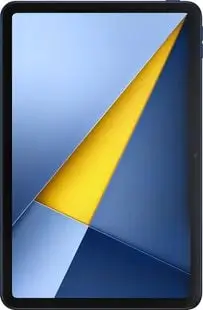
Compared 2 smartphones : OnePlus Pad Manufactured in April, 2023, with display 11.61 with chipsetMediaTek Dimensity 9000, vs Xiaomi Poco Pad C1, Manufactured in May, 2026with chipsetQualcomm Snapdragon 6s 4G Gen 2. Below are specs, tests, pros and cons for each device
Key Differences
Reasons to choose OnePlus Pad
- Larger display: 11.61in
- Higher pixel density: 296ppi
- Higher refresh rate: 144Hz
- Higher battery capacity: 9510mAh vs 7600mAh
- Newer Bluetooth version: 5.3 vs 5
- Supports Dolby Atmos
Reasons to choose Xiaomi Poco Pad C1
- Lighter design: 406g vs 552g
Versions
| Memory Options | - 8/128 GB - 12/256 GB |
- 4/64 GB - 6/128 GB |
Review
Display
Color accuracy, sharpness & brightness
Camera
Main & front camera tests
Performance
App & system performance
Games
3D gaming performance
Battery
Battery life, charging speed & type
Connectivity
Connectivity features
Adjust each parameter’s importance to find the best match for you.
Tests & specs
Specs & test comparisonDisplay
| Type | IPS LCD | IPS LCD |
| Size | 11.61 in | 9.7 in |
| Resolution | 2000x2800 pixels | 1280x2048 pixels |
| Aspect ratio | 7:5 | n/a |
| Pixel density | 296 ppi | 268 ppi |
| Refresh rate | 144 Hz | 120 Hz |
| Adaptive refresh rate | No | Yes |
| Max brightness | 500 nits | 600 nits |
| HDR support | Yes Dolby Vision | No |
| Screen-to-body ratio | 84.2 % | 87.9 % |
| Features | DCI-P3 | n/a |
| sRGB gamut | 99.8 % | n/a |
| PWM (Flicker) | 60 Hz | n/a |
| Response time | 20 ms | n/a |
| Contrast | 1481:1 | n/a |
Design & Build
| Height | 258.03 mm (10.16 in) | 226.51 mm (8.92 in) |
| Width | 189.41 mm (7.46 in) | 147.97 mm (5.83 in) |
| Thickness | 6.54 mm (0.26 in) | 7.4 mm (0.29 in) |
| Weight | 552 g (19.47 oz) | 406 g (14.32 oz) |
| Area | 489 cm² (75.8 in²) | 335 cm² (51.93 in²) |
| Water resistance | No | No |
| Back panel | Metal | Metal |
| Frame | Metal | Metal |
| Colors | Green | - Gray - Blue |
| Fingerprint sensor | No | No |
Screen-to-body ratio
Performance
| Chipset | MediaTek Dimensity 9000 | Qualcomm Snapdragon 6s 4G Gen 2 |
| Max Frequency | 3050 MHz | 2900 MHz |
| CPU Cores | 8 (1 + 3 + 4) | 8 (4 + 4) |
| Architecture | - 4/1.8 (Cortex-A510) - 3/2.85 (Cortex-A710) - 1/3.05 (Cortex-X2) |
- 4/1.9 (Cortex-A53) - 4/2.9 (Cortex-A73) |
| Process | TSMC | TSMC |
| Transistor Size | 4 nm | 6 nm |
| Neural Processor | MediaTek APU 590 | Hexagon |
| Graphics | Mali-G710 MP10 | n/a |
| GPU Cores | 960 | n/a |
| GPU Frequency | 848 MHz | n/a |
| FLOPS | 1085.4 GFLOPS | n/a |
| Geekbench 6 (Single-Core) | 1691 | 490 |
| Geekbench 6 (Multi-Core) | 4386 | 1512 |
| Geekbench Compute (GPU) | 6296 | n/a |
| CPU | 279734 | 200538 |
| GPU | 281624 | 29602 |
| Memory | 165047 | 114287 |
| UX | 232559 | 138620 |
| NanoReview Score | 958964 | 511632 |
Memory
| RAM Size | 8 GB | 4 GB |
| Memory Type | LPDDR5 | LPDDR4X |
| Memory Frequency | 3200 MHz | 2133 MHz |
| Channels | 4 | 2 |
| Storage Capacity | 128 GB | 64 GB |
| Storage Type | UFS 3.1 | UFS 2.2 |
| Memory Card | No | MicroSD |
Software
| OS | Android 13 (Upgradeable to Android 15) | Android 16 |
| OS Size | 23 GB | n/a |
| UI Skin | OxygenOS 15 | n/a |
Battery
| Volume | 9510 mAh | 7600 mAh |
| Max Charging Power | 67 W | 18 W |
| Battery Type | Li-Po | Li-Po |
| Removable | No | No |
| Wireless Charging | No | No |
| Reverse Charging | No | No |
| Fast Charging | Yes (50% in 30 min) | Yes |
| Full Charge Time | 1:18 h | n/a |
| Web Browsing | 08:15 h | n/a |
| Video Playback | 12:45 h | n/a |
| Games | 05:59 h | n/a |
| Standby Mode | 112 h | n/a |
Main camera
| Matrix | 13 MP | 8 MP |
| Photo resolution | 4160x3120 pixels | 3264x2448 pixels |
| Zoom | n/a | Digital |
| Flash | LED | No |
| Stabilization | Digital | Digital |
| 8K Recording | No | No |
| 4K Recording | Yes (Up to 30 fps) | No |
| 1080p Recording | Yes (Up to 30 fps) | Yes (Up to 30 fps) |
| Slow Motion | No | No |
| Lenses count | Standard: 13 MP | Standard: 8 MP |
| Features | Bokeh effect |
| Matrix | 13 MP | 8 MP |
| Aperture | f/2.2 | f/2.0 |
| Focal length | 23 mm | n/a |
| Sensor size | n/a | 1/4.0 (0.25) |
| Pixel size | n/a | 1.12 μm |
| Autofocus | Phase autofocus | Phase autofocus |
| Stabilization | Digital | Digital |
Front camera
| Matrix | 8 MP | 5 MP |
| Aperture | f/2.3 | f/2.2 |
| Sensor | CMOS | CMOS |
| Sensor size | 1/4.0" | 1/5.0 (0.2) |
| Pixel size | 1.12 μm | 1.12 μm |
| Autofocus | No | No |
| Stabilization | Digital | Digital |
| Video resolution | 1080p (Full HD) at 30 fps | 1080p (Full HD) at 30 fps |
| TOF 3D sensor | No | No |
Connectivity
| Wi-Fi version | Wi-Fi 6 (802.11 a/b/g/n/ac/ax) | Wi-Fi 5 (802.11 a/b/g/n/ac) |
| Wi-Fi features | - Dual Band - Wi-Fi MiMO - Wi-Fi Direct - Wi-Fi Hotspot - Wi-Fi Display |
- Dual Band - Wi-Fi Direct - Wi-Fi Hotspot - Wi-Fi Display |
| Bluetooth version | 5.3 | 5 |
| Bluetooth features | LE | LE |
| USB type | USB Type-C | USB Type-C |
| USB version | 2 | 2 |
| USB features | - Charging - USB Storage Mode - OTG |
- Charging - USB Storage Mode - OTG |
| DisplayPort | No | No |
| GPS | - GPS - GLONASS - Beidou - Galileo |
n/a |
| NFC* | No | No |
| Infrared Port | No | No |
| SIM Type | No | No |
| eSIM Support * | n/a | No |
| Hybrid Slot | n/a | No |
| 5G Support | No | No |
Sound
| Speakers | 4.0 | n/a |
| 3.5 mm Jack | No | Yes |
| FM Radio | No | No |
| Dolby Atmos | Yes | n/a |
Other
| Class | Mid-range | Budget |
| Announced | February, 2023 yr | May, 2026 yr |
| Release Date | April, 2023 yr | May, 2026 yr |
| Launch Price ($) | 479 | n/a |
| Sensors | - Hall Sensor - Gyroscope - Accelerometer - Ambient Light Sensor - Compass |
- Proximity Sensor - Accelerometer |
| Charger Included | Yes 67 W | Yes, 18 W |
*
Attention!
Config, frequencies, NFC, and other specs may vary by region.
Results
No clear favorite identified yet; updates may follow as new data arrives.
Survey
Total Votes: 0


