Nothing Phone (4a) Pro vs OnePlus 15T
77
out 100

VS
92
out 100
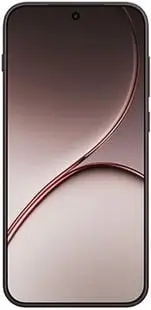
Compared 2 smartphones : Nothing Phone (4a) Pro Manufactured in March, 2026, with display 6.83 with chipsetQualcomm Snapdragon 7 Gen 4, vs OnePlus 15T, Manufactured in March, 2026 with chipsetQualcomm Snapdragon 8 Elite Gen 5. Below are specs, tests, pros and cons for each device
Key Differences
Reasons to choose Nothing Phone (4a) Pro
- Larger display: 6.83in
Reasons to choose OnePlus 15T
- Higher pixel density: 460ppi
- Higher refresh rate: 165Hz
- Lighter design: 194g vs 210g
- Higher battery capacity: 7500mAh vs 5080mAh
- Newer Bluetooth version: 6.0 vs 5.4
- Supports DisplayPort
- Infrared port
- Includes charger
Versions
| Memory Options | - 8/128 GB - 8/256 GB - 12/256 GB |
- 12/256 GB - 12/512 GB - 16/256 GB - 16/512 GB - 16/1024 GB |
Review
Display
Color accuracy, sharpness & brightness
Camera
Main & front camera tests
Performance
App & system performance
Games
3D gaming performance
Battery
Battery life, charging speed & type
Connectivity
Connectivity features
Adjust each parameter’s importance to find the best match for you.
Tests & specs
Specs & test comparisonDisplay
| Type | AMOLED | AMOLED |
| Size | 6.83 in | 6.32 in |
| Resolution | 1260x2800 pixels | 1216x2640 pixels |
| Aspect ratio | 20:9 | 19.5:9 |
| Pixel density | 440 ppi | 460 ppi |
| Refresh rate | 144 Hz | 165 Hz |
| Adaptive refresh rate | Yes (30-120 Hz) | Yes (60-165 Hz) |
| Max brightness | 1600 nits | 1800 nits |
| HDR support | Yes, HDR10+ | Yes, Dolby Vision |
| Touch Sampling Rate | n/a | 330 Hz |
| Screen-to-body ratio | 89.9 % | 90.7 % |
| Features | - DCI-P3 - Always-On Display - DC dimming |
- DCI-P3 - Always-On Display - DC dimming |
| sRGB gamut | n/a | 99.9 % |
| PWM (Flicker) | n/a | 120 Hz |
| Response time | n/a | 6 ms |
| Contrast | n/a | ∞ Infinite |
Design & Build
| Height | 163.6 mm (6.44 in) | 150.56 mm (5.93 in) |
| Width | 76.6 mm (3.02 in) | 71.82 mm (2.83 in) |
| Thickness | 7.9 mm (0.31 in) | 8.35 mm (0.33 in) |
| Weight | 210 g (7.41 oz) | 194 g (6.84 oz) |
| Water resistance | IP65 | IP69 |
| Cooling system | Vapor chamber | Vapor chamber |
| Back panel | Metal | Plastic |
| Frame | Metal | Metal |
| Colors | - Black - Silver - Pink |
- White - Green - Brown |
| Fingerprint sensor | Yes, In-Display | Yes, In-Display |
Screen-to-body ratio
Performance
| Chipset | Qualcomm Snapdragon 7 Gen 4 | Qualcomm Snapdragon 8 Elite Gen 5 |
| Max Frequency | 2800 MHz | 4608 MHz |
| CPU Cores | 8 (1 + 4 + 3) | 8 (2 + 6) |
| Architecture | - 3/1.84 (Kryo Silver (Cortex-520)) - 4/2.4 (Kryo Gold (Cortex-720)) - 1/2.8 (Kryo Prime (Cortex-720)) |
- 6/3.63 (Oryon Gen 3 Performance) - 2/4.61 (Oryon Gen 3 Prime) |
| Process | TSMC | TSMC |
| Transistor Size | 4 nm | 3 nm |
| Neural Processor | Yes | Hexagon |
| Graphics | Adreno 722 | n/a |
| GPU Cores | 512 | n/a |
| GPU Frequency | 1150 MHz | n/a |
| FLOPS | 1177.6 GFLOPS | n/a |
| Geekbench 6 (Single-Core) | 1373 | 3640 |
| Geekbench 6 (Multi-Core) | 4243 | 11033 |
| Geekbench Compute (GPU) | 7583 | n/a |
| CPU | 390368 | 1052960 |
| GPU | 377879 | 1369637 |
| Memory | 193509 | 479431 |
| UX | 225057 | 774927 |
| NanoReview Score | 1186813 | 3676955 |
Memory
| RAM Size | 8 GB | 12 GB |
| Memory Type | LPDDR5 | LPDDR5X |
| Memory Frequency | 3200 MHz | 5300 MHz |
| Channels | 4 | 4 |
| Storage Capacity | 128 GB | 256 GB |
| Storage Type | UFS 3.1 | UFS 4.1 |
| Memory Card | No | No |
Software
| OS | Android 16 | Android 16 |
| OS Size | n/a | 57 GB |
| UI Skin | Nothing OS 4.1 | ColorOS 16 |
Battery
| Volume | 5080 mAh | 7500 mAh |
| Max Charging Power | 50 W | 100 W |
| Battery Type | Li-Po | Silicon Carbon (Si/C) |
| Removable | No | No |
| Wireless Charging | No | Yes (50 W) |
| Reverse Charging | Yes | Yes |
| Fast Charging | Yes (50% in 28 min) | Yes (61% in 30 min) |
| Full Charge Time | 1:12 h | 0:46 h |
Main camera
| Matrix | 50 MP | 50 MP |
| Photo resolution | 8192x6144 pixels | 8192x6144 pixels |
| Zoom | Optical, 3.5x | Optical, 3.5x |
| Flash | LED | Dual LED |
| Stabilization | Optical | Optical |
| 8K Recording | No | Yes (Up to 30 fps) |
| 4K Recording | Yes (Up to 30 fps) | Yes (Up to 120 fps) |
| 1080p Recording | Yes (Up to 60 fps) | Yes (Up to 120 fps) |
| Slow Motion | 240 fps (720p) | 480 fps (720p) |
| Wide-angle lens | 120 ° | n/a |
| Lenses count | Standard: 50 MP Telephoto: 50 MP Ultra-wide: 8 MP |
Standard: 50 MP Telephoto: 50 MP |
| Features | - Bokeh effect - Pro mode |
- Bokeh effect - Pro mode - RAW support |
| Matrix | 50 MP | 50 MP |
| Aperture | f/1.9 | f/1.8 |
| Focal length | 24 mm | 24 mm |
| Sensor | Sony LYT-710 | Sony IMX906 |
| Sensor size | 1/1.56 (0.64) | 1/1.56 (0.64) |
| Pixel size | 1 μm | 1 μm |
| Autofocus | Phase autofocus (Dual Pixel) | Phase autofocus |
| Stabilization | Optical | Optical |
| Matrix | 50 MP | 50 MP |
| Aperture | f/2.9 | f/2.8 |
| Focal length | 80 mm | 85 mm |
| Sensor | Samsung S5KJN5 | Samsung S5KJN5 |
| Sensor size | 1/2.75 (0.36) | 1/2.76 (0.36) |
| Pixel size | 0.64 μm | 0.64 μm |
| Stabilization | Optical | Optical |
| Matrix | 8 MP | n/a |
| Aperture | f/2.2 | n/a |
| Focal length | 15 mm | n/a |
| Sensor | Sony IMX355 | n/a |
| Sensor size | 1/4.0 (0.25) | n/a |
| Pixel size | 1.12 μm | n/a |
| Stabilization | Digital | n/a |
Front camera
| Matrix | 32 MP | 16 MP |
| Aperture | f/2.2 | f/2.4 |
| Focal length | 22 mm | 23 mm |
| Sensor | ISOCELL CMOS | CMOS |
| Sensor size | 1/3.42 (0.29) | n/a |
| Pixel size | 0.64 μm | 1 μm |
| Autofocus | No | No |
| Stabilization | Digital | Digital |
| Video resolution | 1080p (Full HD) at 30 fps | 1080p (Full HD) at 30 fps |
| TOF 3D sensor | No | No |
Connectivity
| Wi-Fi version | Wi-Fi 6 (802.11 a/b/g/n/ac/ax) | Wi-Fi 7 (802.11 a/b/g/n/ac/ax/be) |
| Wi-Fi features | - Dual Band - Wi-Fi MiMO - Wi-Fi Direct - Wi-Fi Hotspot - Wi-Fi Display |
- Dual Band - Wi-Fi MiMO - Wi-Fi Direct - Wi-Fi Hotspot - Wi-Fi Display |
| Bluetooth version | 5.4 | 6.0 |
| Bluetooth features | LE | LE |
| USB type | USB Type-C | USB Type-C |
| USB version | 2 | 2 |
| USB features | - Charging - USB Storage Mode - OTG |
- Charging - USB Storage Mode - OTG |
| DisplayPort | No | Yes |
| GPS | - GPS - GLONASS - Beidou - Galileo - QZSS |
- GPS - GLONASS - Beidou - Galileo - QZSS |
| NFC* | Yes | Yes |
| Infrared Port | No | Yes |
| SIM Count* | 2 | 2 |
| SIM Type | Nano | Nano |
| SIM Mode | Dual SIM Standby | Dual SIM Standby |
| eSIM Support * | Yes | Yes |
| Hybrid Slot | No | No |
| 2G Bands | GSM 850 / 900 / 1800 / 1900 | GSM 850/900/1800MHz |
| 3G Bands | UMTS B1, 2, 4, 5, 6, 8, 19 | WCDMA 1/2/4/5/8 |
| LTE Bands* | LTE (B1/B2/B3/B4/B5/B7/B8/B12/B17/B18/B19/B20/B25/B26/B28/B38/B40/B41/B42/B48/B66/B71) | LTE (B1/B2/B3/B4/B5/B7/B8/B18/B19/B26/B28/B34/B38/B39/B40/B41/B42/B43/B48/B66) |
| 5G Support | Yes | Yes |
Sound
| 3.5 mm Jack | No | No |
| FM Radio | No | No |
| Dolby Atmos | No | No |
Other
| Class | Mid-range | Flagship |
| Announced | March, 2026 yr | March, 2026 yr |
| Release Date | March, 2026 yr | March, 2026 yr |
| MSRP ($) | 499 | 799 |
| Sensors | - Proximity Sensor - Gyroscope - Accelerometer - Ambient Light Sensor - Compass - Fingerprint sensor |
- Proximity Sensor - Gyroscope - Accelerometer - Ambient Light Sensor - Compass - Fingerprint sensor |
| Charger Included | No | Yes, 100 W |
*
Attention!
Config, frequencies, NFC, and other specs may vary by region.
Results
After analyzing the data, we consider OnePlus 15T the clear winner in this comparison.
Survey
Total Votes: 0


